It's All About the... Rendering
Novel execution vs properly rendering a whole world

People often say that you can learn more about writing from reading books than from taking any craft class. While this is true, I also think it’s pretty shitty advice, especially to new writers.
I remember in 2013 (?) I received my first piece of feedback on my first novel. The conclusion of the report was: ‘You need to read more, specifically less Hemingway.’ Ok. But reading more is too abstract, because that’s something writers are always just … doing. It gives you examples, influences, a sense of what’s possible. But it can’t tell you how to find the story that’s actually inside you.
Writing classes are better because they give you frameworks, craft vocabulary, a way of thinking about structure, setting, sentence, and scene. But in those classes, you also hear people say: ‘It’s all about the execution of the story.’ Come up with a great plan, execute it well, and you’ve done your job. A ⭐️ on your assignment.
I think this is too easy, too simple. Execution implies a blueprint pre-exists and you’re just assembling it. Products need to be executed. Oh, capitalism. But at the very nascent stage of a writing project, your story is not a product. It’s art.
Reading can give you examples or models. Classes give you frameworks. But neither can render your story for you. Only drafting can do that.
Kind of like how a large photograph is rendered on a screen: first pixellated, then, as time passes, clearer, sharper. You can’t skip to the sharp image. You have to let it resolve pixel by pixel.
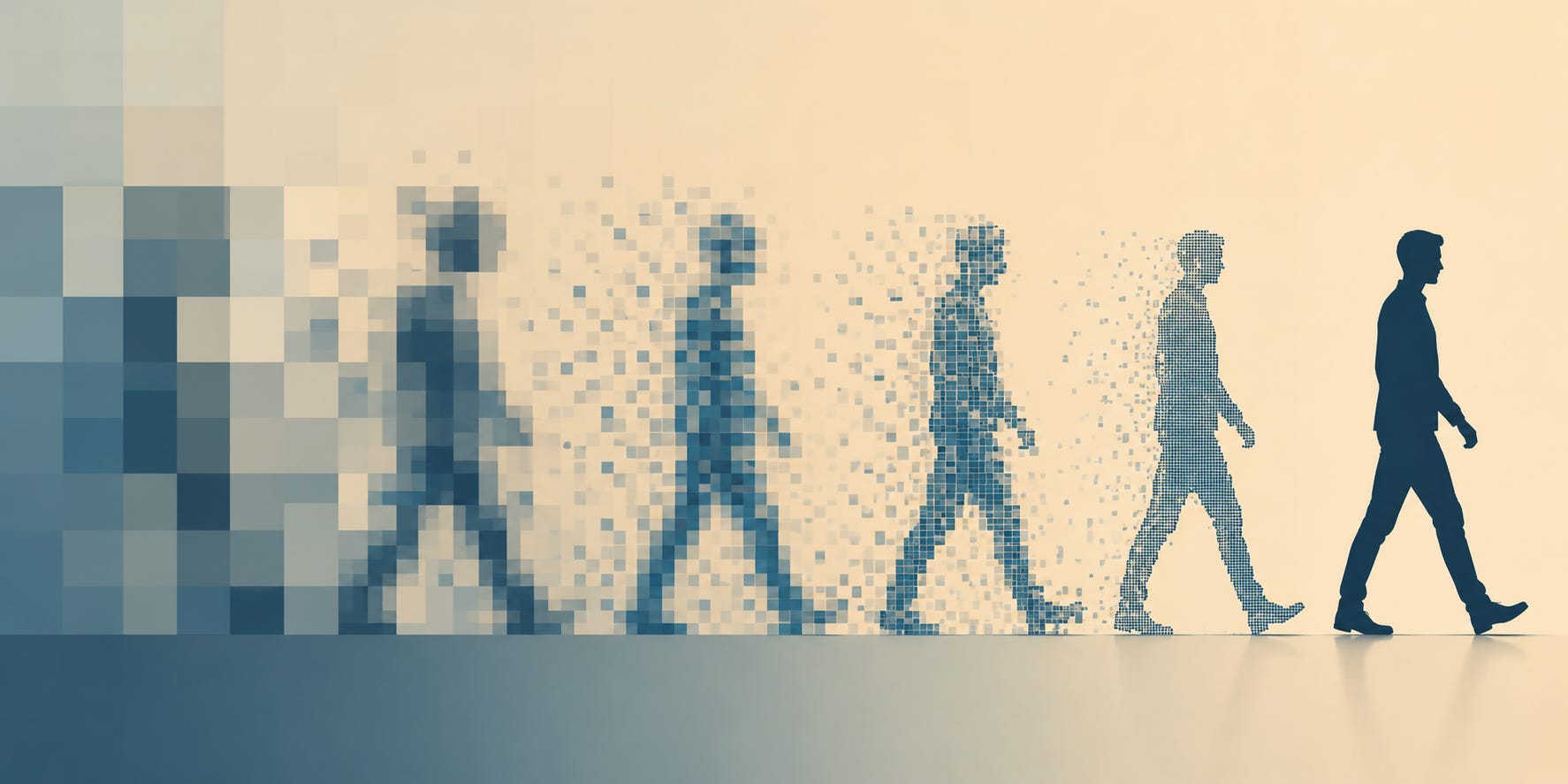
Similarly, a novel in early drafts is a mess. Wayward outlines, surface characters, wrong turns. But as I refine, refine, refine, the story becomes what it was always trying to be. Rendered in the way I’d intended.
Not executed, but rendered.
Think about a conversation with someone you’ve just met. At the beginning, basic questions — name, where from, etc. But as it progresses, you find your footing, and by the end you’ve created something fluid, flowing. You couldn’t have planned that conversation. You had to experience it first.
Drafts work the same way. At draft 0 or 1, I don’t know what I’m doing. I have a vague idea, and then it changes after sometimes tens of thousands of binned words. Once I feel the right story’s on the page, I go into the second draft to refine the structure. Make the images more concrete. Then multiple character passes, a settings pass, a motif(s) pass, and so on. If you want a practical framework for thinking through these stages, Seven Drafts: Self-Edit Like a Pro from Blank Page to Book maps out the editing process in a way that connects well with this idea of progressive clarification.
Don’t think of yourself as executing a perfect story. Think instead about rendering the truth of your story. Reading more or less of Hemingway won’t get you there. Neither will the perfect outline or the right craft class.
Only drafting will. So, be a draftsperson.